

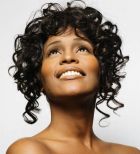
WHITNEY HOUSTON
STORY
PLAYLIST
Whitney Houston. Life and Legacy
Crowned queen of pop and soul, Whitney Houston was a unique artist with a great internal battle, who would win, the demons or the music?
About Whitney Houston
Whitney Houston, often referred to as ‘The Voice,’ was one of the most celebrated and influential artists in the history of music. With a career spanning over three decades, she sold over 200 million records worldwide and won numerous awards, including six Grammy Awards. Her powerful voice, charismatic presence, and timeless hits like ‘I Will Always Love You’ and ‘Greatest Love of All’ left an indelible mark on pop culture and the music industry.
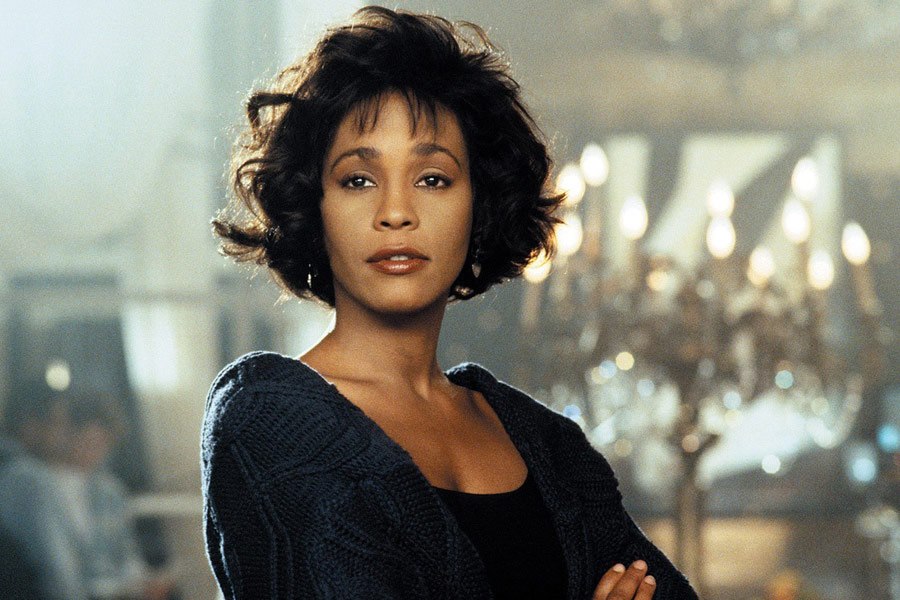
Screenshot from ‘The bodyguard’
Whitney Houston's Timeline
Key milestones and unforgettable moments in Whitney Houston’s life and career.
'83
Debut Album
Whitney Houston released her self-titled debut album, which included hits like ‘Saving All My Love for You’ and ‘How Will I Know’.
'92
The Bodyguard
Starred in the blockbuster film ‘The Bodyguard’ and recorded the best-selling soundtrack, featuring ‘I Will Always Love You’.
'98
My Love Is Your Love
Released the critically acclaimed album ‘My Love Is Your Love,’ showcasing her versatility and enduring appeal.
'09
Comeback Album
Released ‘I Look to You,’ marking her return to the music scene after a hiatus, and demonstrating her resilience and passion for music.
Early Life and Beginnings
Whitney Houston was born on August 9, 1963, in Newark, New Jersey. Growing up in a musical family, she was surrounded by the sounds of gospel, soul, and R&B. Her mother, Cissy Houston, was a renowned gospel singer, and her cousins Dionne Warwick and Dee Dee Warwick were also prominent figures in the music industry. Whitney’s talent was evident from a young age, and she began singing in the church choir at New Hope Baptist Church. Her early exposure to music and her family’s influence laid the foundation for her future career.
Rise to Fame
Major Achievements
Whitney Houston’s rise to fame began in the mid-1980s when she signed with Arista Records. Her debut album, ‘Whitney Houston,’ released in 1985, was a monumental success, producing hit singles like ‘Saving All My Love for You’ and ‘How Will I Know.’ The album’s success catapulted her to international stardom, and she quickly became one of the best-selling artists of all time. Her follow-up album, ‘Whitney,’ released in 1987, continued her streak of chart-topping hits, including ‘I Wanna Dance with Somebody’ and ‘Didn’t We Almost Have It All.’ Whitney’s powerful voice and charismatic stage presence made her a global icon.

Personal Struggles
Despite her immense success, Whitney Houston faced numerous personal struggles throughout her life. Her tumultuous marriage to singer Bobby Brown was often in the public eye, and the couple’s relationship was marred by allegations of substance abuse and domestic disputes. Whitney’s battle with addiction took a toll on her career and personal life, leading to several stints in rehab. Despite these challenges, she continued to perform and release music, showing resilience and determination. Her story is a poignant reminder of the pressures and pitfalls of fame.


Whitney Houston's Cinematic Journey
In the fourth chapter of Whitney Houston’s biography, we delve into her remarkable contributions to the film industry. Whitney’s transition from music to movies was seamless, marked by her debut in the 1992 blockbuster, ‘The Bodyguard.’ Her performance, alongside Kevin Costner, was not only a commercial success but also showcased her versatility as an actress. The film’s soundtrack, featuring the iconic ‘I Will Always Love You,’ became one of the best-selling soundtracks of all time, further cementing her legacy in both music and film.

IA generated image

The Bodyguard
Whitney’s role in ‘The Bodyguard’ was groundbreaking. She portrayed Rachel Marron, a music superstar who hires a bodyguard to protect her from a stalker. The film’s success was a testament to her acting prowess and her ability to captivate audiences beyond her singing talent.
Waiting to Exhale
In 1995, Whitney starred in ‘Waiting to Exhale,’ a film that celebrated African-American women and their experiences. Her portrayal of Savannah Jackson, a successful television producer, was both poignant and powerful, resonating with many viewers and critics alike.
The Preacher's Wife
In 1996, Whitney took on the role of Julia Biggs in ‘The Preacher’s Wife,’ a heartwarming film that highlighted her acting range. Her performance was complemented by a soulful soundtrack, which became the best-selling gospel album of all time. Whitney’s contributions to cinema were not just limited to her roles but also included her musical influence, making her a multifaceted artist.

Whitney Houston's Enduring Legacy
The fifth chapter of Whitney Houston’s biography reflects on her enduring legacy and the lasting impact of her music. Whitney’s influence on the music industry is immeasurable. Her powerful voice and emotive performances have inspired countless artists across generations. Even after her untimely passing, her music continues to resonate with fans worldwide, proving that her legacy is timeless.
Influence on Future Artists
Whitney’s impact on future artists is profound. Many contemporary singers cite her as a major influence, striving to emulate her vocal techniques and emotional depth. Her ability to convey raw emotion through her music has set a standard that many aspire to reach.
Philanthropic Efforts
Beyond her musical achievements, Whitney was also known for her philanthropic efforts. She established the Whitney Houston Foundation for Children, which focused on helping homeless children and those with cancer or AIDS. Her charitable work left a lasting impact, showcasing her dedication to giving back to the community.
Final Thoughts
A Lasting Influence
In conclusion, Whitney Houston’s life and career were nothing short of extraordinary. From her groundbreaking achievements in music and film to her philanthropic endeavors, Whitney’s influence extends far beyond her time. Her voice, often described as a national treasure, continues to inspire and move people around the world. Whitney’s story is one of immense talent, resilience, and an enduring legacy that will forever be etched in the annals of music history. She remains an icon whose contributions have left an indelible mark on the world.
Whitney Houston complete biography
Chapter 1 | A Happy Childhood with a Big Secret
Whitney Elizabeth Houston was born on August 9, 1963 in New Jersey, United States. From an early age, her father, John Russell Houston Jr. gave her the nickname Nippy, by which she would be called all her life by her friends and family.
The biggest inspiration in Whitney’s life was always her mother, Emily Drinkard, a gospel and soul singer known to all as Cissy. Cissy’s voice was the only one that truly moved Whitney to sing, and it was she who taught her all about how to do it.
Cissy tried her hand at a solo career, but was unsuccessful. However, she did succeed as a member of The Drinkard Singers, with whom she won a Grammy, and later founded The Sweet Inspirations before going solo. Whitney’s father, John, was an ex-military man who later served as the mayor of Newark’s chief city planner. His administration was quite corrupt, as no building could be constructed without John’s approval, who exploited this situation for his own self-interest.
Whitney had three older brothers: a half-brother on his father’s side, John III, another on his mother’s side, Gary, and Michael, whom Whitney followed everywhere and considered his favorite. Michael also tried his luck as a singer and basketball player. They all grew up together in the Newark ghetto, and Whitney was known for being a sassy and a bit of a know-it-all kid, which was pretty much accurate.
Her home always played gospel music and her mother’s songs. In addition to her band, Cissy did backing vocals for artists like Aretha Franklin and Elvis Presley, which kept her out of the house for long periods. Because of this, Whitney and her siblings spent time with other families.
Throughout her career, Whitney faced questions about her race because of her lighter skin tone compared to her parents. In her neighborhood, black people used to make fun of her because of her light skin and elegant way of dressing. Despite this, Whitney always made it clear that both she and her parents were African American.
Whitney did not have many friends and spent a lot of time in church. Despite being a very pretty and good looking girl, she was not always understood by her surroundings. Her cousins were also singers and quite popular; one of them was Dionne Warwick and the other, Dee Dee Warwick. Her family, known as The Drinkard Singers, even had a distant cousin who was an opera singer, Leontyne Price. In addition, Aretha Franklin became her honorary aunt and Darlene Love was her godmother, which made family gatherings very special.
In 1970, when Whitney was seven years old, her family moved to a house with a garden and pool in East Orange to escape the race riots in Newark. At the same time, Whitney changed schools and began attending an all-girls private school, which her parents felt was necessary to protect her from bullying and the dangerous streets. Whitney describes this time as a happy childhood.
Her parents raised her in the Baptist faith, and by the age of five, Whitney was already a member of the choir at New Hope Baptist Church in Newark, where she also learned to play the piano. At the age of twelve, she made her debut as a soloist singing the hymn “Guide Me O Thou Great Jehovah.” Although she was unclear about who God was, she was sure she loved music.
Cissy was her singing teacher, and Whitney remembers her being very hard on her. She would often come home angry after singing lessons. At thirteen, Whitney decided she wanted to be a singer, something she shared with her mother. This prompted Cissy to be even stricter and enroll Whitney in Franklin Elementary School, which today bears her name: Whitney E. Houston Academy of Creative and Performing Arts. Whitney would later attend Mount Saint Dominic Academy.
In 1977, at the age of fourteen, Whitney participated in a state talent show, where she placed second. However, the real milestone in her life was joining her mother’s band as a backup singer. Her debut took place in 1978, at Town Hall in Manhattan, where she performed “Tomorrow” from the musical Annie. This was her first ovation, the first of many. Whitney also collaborated on recordings by other artists such as Lou Rawls and Chaka Khan, and even recorded lead vocals with her mother on the song “Life’s a Party”.
Whitney wanted her mother to take her to the record labels to try her luck, but both Cissy and her father felt she still needed to mature further, so she began to make a living as a model. Her modeling career began almost by chance when a photographer saw her at a benefit concert at Carnegie Hall and was fascinated by her. Soon, Whitney became one of the first black women to appear on the cover of Seventeen magazine. For a time, she was one of the most sought-after teen models, appearing in fashion ads for magazines such as Glamour, Cosmopolitan and Young Miss.
Despite her success as a model, Whitney’s real passion was music. She continued to record vocals for artists such as Michael Zager and Luther Vandross while completing her studies.

IA generated image
Chapter 2 | The Path of Music and Doom
In 1981, at the age of 17, Whitney hired her first manager, Gene Harvey, and began auditioning with some record labels, which would lead her to sing on songs such as “Memories” by the band Material, or “Eternal Love” by Paul Jabara.
Although Elektra Records offered her a contract, her life really changed during a gig her mother had in New York, at the Seventh Avenue South nightclub in Manhattan, where Whitney accompanied her. Cissy pretended to be hoarse and asked Whitney to fill in for her. The place was packed and Whitney, though frightened, went on stage and imitated her mother’s every gesture. A week later, Clive Davis of Arista Records came to see her. Upon hearing her sing “Greatest Love of All,” he offered her a worldwide record deal. Despite having several offers on the table, Whitney signed with him at the age of 19.
Just two weeks later, Davis was already featuring her on The Merv Griffin Show. One of her first performances with Arista Records was the song “Home,” from the musical The Wiz.
But it wasn’t all joy in her life. Something unexpected shook the family when it was discovered that his mother, Cissy, was having an affair with the pastor of the church. This was something her father couldn’t stand, and the couple separated. Whitney was very hurt, so much so that she decided to move in with her best friend, Robyn Crawford. Her siblings didn’t like Robyn, as they thought she had bad intentions and was only close to Whitney because she was a lesbian and wanted something more with her. However, Whitney was always a free person and let things flow, so she and Robyn were inseparable.
During that time, Whitney recorded her first duet with Teddy Pendergrass, a song called “Hold Me,” which became her first hit, reaching the top of the R&B charts. In addition, Whitney continued to model from time to time, appearing in commercials such as the one for Canada Dry beverage or in commercial jingles for chains such as Steak & Ale.
In 1985, she finally released her first single, “Saving All My Love for You,” followed by “How Will I Know” and “Greatest Love of All,” all part of her first album, Whitney Houston, which went six times platinum.
The album broke numerous records: it stayed more than three years on the Billboard 200, being number one for 14 weeks. The album reached the Top 5 in more than ten countries. At the time it sold 14 million copies, although today that figure exceeds 25 million. Whitney was the first female solo artist to release three number one singles from the same album. She received four Grammy Awards, including Album of the Year and Best Female Pop Vocal Performance for “Saving All My Love for You”. The music video for “How Will I Know” won her an MTV Video Music Award, and although at first the network almost didn’t air the video because Whitney was a black female artist, the song was so successful that they had no choice but to change their minds and air it. This achievement opened the door for many other African-American artists, such as Janet Jackson and Tracy Chapman.
In July 1986, Whitney embarked on her first world tour, The Greatest Love World Tour, performing 50 concerts until the end of the year.
With fame also came rumors about her personal life. She was linked to Eddie Murphy, to the famous quarterback Randall Cunningham and it was even said that Robert De Niro was interested in her. However, her first public love was restaurateur Brad Johnson, followed by musician Jermaine Jackson and actor Eddie Murphy. Above all these relationships, however, lingered the specter of her close friendship with Robyn, something the label hated because of the bad press it generated, as it contradicted the image of the perfect young woman they wanted to project.
Whitney’s father, John Houston, took control of her career, something he loved for the power it gave him. John put his wife, Cissy, and his two sons on the label’s payroll, although they had no clear roles. His brother Gary joined the chorus, although he wasn’t enthusiastic about it, and his other brother, Michael, acted as road-manager or the official entertainer. In essence, they were doing what they had always done: guarding and protecting Whitney, but this time surrounded by fame, money, parties, women and lots of drugs.
Whitney was no exception. At the time, she was on everything from marijuana to cocaine. It was very simple: whatever she wanted, she asked her brothers for it, and she got it right away.
Fame also brought criticism, just as it did in her childhood. She was accused of not representing African-American music because her style was closer to Pop. However, for Whitney, things were much simpler: she sang neither black nor white, she sang from the heart.

IA generated image
Chapter 3 | I Want To Dance With Somebody. The worldwide success
In June 1987, Whitney released her second album, simply called Whitney. The album was a huge commercial success, making her the first woman in music history to debut at number one on the U.S. Billboard chart, a milestone she replicated in dozens of countries around the world. The album’s first single was her signature song, “I Wanna Dance with Somebody (Who Loves Me)”. The song went straight to number one and remains a fan favorite, racking up more than a billion listens.
This hit was followed by other singles such as “Didn’t We Almost Have It All”, “So Emotional” and “Where Do Broken Hearts Go”. Whitney achieved with these singles seven consecutive number ones, surpassing Elvis and The Beatles.
In 1987, Whitney began her second world tour, which lasted two years and included 150 concerts, making it the highest-grossing tour of the year by a female performer. That year, Whitney grossed $43 million dollars. As part of the tour, she performed at Wembley in front of 72,000 people in a concert in support of Nelson Mandela, who was incarcerated at the time.
In 1988, Whitney recorded the song for the Summer Olympics, “One Moment in Time”. A year later, in 1989, she created the Whitney Houston Foundation For Children, to raise funds to meet the needs of children around the world. The organization focused on homelessness, children with cancer or AIDS, and other self-help issues. The foundation continues to exist under the name Whitney E. Houston Legacy Foundation.
That same 1989, Whitney experienced a display of hatred related to the color of her skin during the “Soul Awards”, where she was booed. However, the night was not completely negative, because at that gala she met Bobby Brown, a neighborhood boy like her, funny and who had also become a new music star. Whitney and Bobby began dating, and in 1992 they married. Her close friend Robyn was hurt, but she knew Whitney had to go her own way. Shortly thereafter, Whitney became pregnant with their first and only child, Bobbi Kristina Brown, whom everyone called Crissy. Although they tried to have more children, Whitney suffered several miscarriages, one of them during the filming of The Bodyguard.
When Crissy was born in 1993, Whitney was 30 years old and her career was going strong, so she decided to take her daughter on tour with her. Although it was not the ideal environment for a little girl, Whitney preferred to have her close by. The one who took the most care of Crissy was Whitney’s aunt Bae, especially at night when the little girl was colicky. In fact, Crissy would sleep with her aunt until she was eight years old.
Before this, in 1990, Whitney released her third album, I’m Your Baby Tonight. This album was the first on which Whitney acted as executive producer, exercising total control over the creative process. The album was much more versatile than her previous works, including harder rhythms, soulful ballads and dance tracks. Although it did not achieve the success of her first two albums, I’m Your Baby Tonight was the tenth best-selling album of the year, selling 10 million copies.
The highlight of the album was the title track, “I’m Your Baby Tonight”. Another hit was “All the Man That I Need”, a subtle and profound song that touched the heart on hearing it. Also very successful was the single “Miracle”, which, like the previous ones, reached the top of the Billboard Hot 100. The single “My Name Is Not Susan” was remixed by British rapper Monie Love, being one of the first cases of remixing a pop song with the participation of a rapper, a trend that would become popular in the 2000s.
Another memorable moment on the album was Whitney’s duet with Stevie Wonder on “We Didn’t Know”. In addition, the Japanese version of the album included a track called “Higher Love” (“Higher Love”), which years later, in 2019, DJ Kygo would remix, achieving more than a billion listens.
In 1991, at the age of 28, Whitney was invited to sing the American national anthem at the Superbowl. Although at first it caused controversy because, due to the noise in the stadium, it was decided to use a pre-recorded voice, the truth is that the interpretation was released as a single, becoming one of the most popular versions of the anthem in history. Part of the proceeds were donated to the American Red Cross Gulf Crisis Fund, and years later, the rendition was reused to raise funds after the terrorist attacks of September 11, 2001.
Her third world tour, I’m Your Baby Tonight World Tour, began in 1991 with over 96 dates, including a historic ten-date sold-out residency at London’s Wembley Arena.

IA generated image
Chapter 4 | Whitney Houston and Her Bodyguard
Due to the success of her music, Whitney began to receive offers to work in the movies with big names like Robert De Niro, Quincy Jones and Spike Lee, but no role convinced her until she was introduced to The Bodyguard. Released in 1992, Whitney played a starlet stalked by a crazed fan who hires a bodyguard, played by Kevin Costner, to protect her. Although critics did not praise the film, it was a runaway success, becoming one of the highest-grossing films in history. Much of its success was due to the soundtrack, which included the iconic “I Will Always Love You,” a 1974 Dolly Parton song that became an international hit, further elevating Whitney’s fame. Such was its popularity that even Saddam Hussein used an Arabic version of the song for his election campaign.
The song sold more than 24 million copies, becoming Whitney’s first diamond single, and earned her another Grammy Award for Record of the Year in 1994. “I Will Always Love You” remains the best-selling physical single ever by a female artist in the United States. The entire soundtrack, which included six Whitney songs, reached the top spot on the Billboard 200 and remained in that position for 20 weeks. It is the second longest-running female album to remain at number one on the chart, second only to Adele’s 21.
All of the songs on the soundtrack were big hits. Among them are “I Have Nothing”, “I’m Every Woman” and the unforgettable “Run to You”. With total sales of 45 million copies, The Bodyguard is not only the best-selling album by a female artist in history, but also the best-selling soundtrack of all time. Whitney racked up several Guinness World Records for these achievements.
In 1994, Whitney was invited to a state dinner at the White House in honor of South African President Nelson Mandela after apartheid. Subsequently, she performed three concerts in South Africa in front of more than 200,000 people, the biggest media event in the country since Mandela’s own inauguration. It was a great honor for Whitney.
The Bodyguard tour took Whitney all over the world between 1993 and 1994.
Her second film came in 1995 with Waiting to Exhale, accompanied by a soundtrack composed by African-American artists, with five of Whitney’s own songs. Among them, “Exhale (Shoop Shoop)” stood out, but the most significant track was “Count On Me,” a collaboration with CeCe Winans that Whitney composed with her brother Michael and Babyface.
After enjoying her movie experience, in 1996 Whitney starred in the Christmas comedy The Preacher’s Wife. She was paid $10 million for her role, making her the highest-paid African-American actress in Hollywood. The film’s predominantly gospel soundtrack featured her mother, Cissy Houston, and became the best-selling gospel album in history, especially thanks to the success of the song “Step by Step”.
Whitney decided to found her own film production company, focused on making films that showed aspects of African-American life that had not been represented on the screen before. Her first production was a television remake of Cinderella.
In 1997, Whitney raised $300 million for the Children’s Defense Fund with three concerts broadcast on HBO under the title HBO Whitney: Live from Washington. A year later, at the age of 34, she received the Quincy Jones Award for her entire career.
Bobby Brown, her husband, was not doing as well as she was. He decided to retire from music, as Whitney’s shadow was too long. She didn’t like being just the accompanist, but she had no choice. Seeing his marriage faltering, Whitney stopped singing for a while to be closer to him, and even made him her manager. However, Bobby wanted to be on stage, and none of this worked out. It was a very difficult period for Whitney. Bobby was discovered with another woman, crashed his car in Hollywood, was accused of sexual harassment by a female worker and even hit Whitney on several occasions. However, Whitney did not want to be like her mother, a divorcee, so she put up with it all.
This tumultuous period led Whitney to turn even more to drugs. Her marijuana and cocaine use increased and eventually she lost control, to the point where she had to cancel several performances. Her mother insisted that she should go to rehab, but her father said she didn’t need to, so Whitney didn’t go.
But things got even worse. Robyn, her great friend and a key figure in the development of her career, handled the relationship with the record label, Whitney’s wardrobe, the stage design and, above all, was one of her biggest supporters. This didn’t sit well with Bobby, who didn’t get along with Robyn. One day, Robyn, fed up with the situation, gave Whitney an ultimatum: either stay with her or stay with Bobby. With all the pain in her heart, Whitney chose her husband. Robyn and Whitney stopped talking for years. At that point, her father took the opportunity to become Whitney’s sole manager, with the clear intention of keeping more money for himself. In fact, he began stealing money from her. When Whitney found out, she couldn’t believe it. It hurt her deeply and she decided to break off the relationship with her father. She was heartbroken.

IA generated image
Chapter 5 | Music or drugs. The final battle
In 1998, after eight years without recording an album due to touring and personal problems, Whitney decided it was time to return to the studio. In a record six weeks, she recorded My Love Is Your Love. The album included a long-awaited duet with another great American female voice, Mariah Carey. The song, “When You Believe,” was featured in the animated film The Prince of Egypt.
Critics received the album enthusiastically, calling it biting, sharp and satisfying. The album had a funkier, edgier sound than previous albums, and included hits such as “It’s Not Right but It’s Okay” (“It’s Not Right but It’s Okay”). Another standout track was the album’s title track, “My Love Is Your Love.” The album remained on the charts for more than two years, selling 11 million copies worldwide. Whitney went on tour with 70 dates, although she canceled many concerts due to her drug problem, although she claimed it was due to throat problems. In the second part of the 1999 tour of Europe, Whitney was feeling better, and the tour ended up being the highest-grossing of the year on the continent.
That same 1999, Whitney was named the best-selling female R&B artist of the century, with certified U.S. sales of 51 million records. That year she also signed the biggest contract any artist had ever had, for $100 million. Her father, seizing the opportunity, sued her for that amount, claiming that Whitney had signed the contract because of him. In 2003, her father passed away, and although Whitney did not attend his funeral, she did go to say goodbye to him during his illness. The lawsuit was dismissed and Whitney did not have to pay the $100 million.
As a sign of her influence as a gay icon, in June 1999, in the midst of the album’s promotional tour, Whitney made a surprise performance at the 13th Annual New York Gay and Lesbian Pride Ball.
In 2000, Whitney released her first compilation album, Whitney: The Greatest Hits, which included several collaborations, such as “Could I Have This Kiss Forever”, a duet with Enrique Iglesias. She also recorded with George Michael the song “If I Told You That”.
Whitney had always had a good girl image, but in the 2000s, this changed. Her drug use caused her to be late for interviews, photo shoots and rehearsals. She canceled concerts and TV appearances, was fired from the Oscar performance and even missed the ceremony in which her friend Clive Davis was inducted into the Rock and Roll Hall of Fame. All this was reflected in her physique: she lost weight, was gaunt, shaky, distracted and had an erratic demeanor.
In 2002, she gave an interview to promote her next album, but was only asked about her drug use and her relationship with her husband. Tired of the media persecution, Whitney declared that she had never used crack because it was cheap. “Crack is crazy,” she said. However, she admitted to using alcohol, marijuana, cocaine and pills, and commented that Bobby Brown didn’t beat her, it was the other way around.
Her fifth studio album, Just Whitney, was released in 2002, produced by Bobby Brown, Missy Elliott and Babyface. It took them months to record it, as Whitney was in bad shape and it showed in her voice. In spite of everything, it had the highest first week of sales of all her albums, although its overall success was lower. Still, the album contained powerful dance tracks such as “You Light Up My Life”.
A year later, Whitney released her first Christmas album, One Wish: The Holiday Album, with a collection of traditional Christmas songs.
Her life was still in turmoil. In 2003, Bobby physically assaulted her, something the police confirmed due to the injuries on her face. Her husband also had several run-ins with the law for drunk driving, drug possession and the aforementioned assault, which led to some jail time. Despite everything, Whitney continued with him and, in 2004, Bobby convinced her to participate in a reality show called Being Bobby Brown, where she was seen in unsavory situations. Although critics found it repugnant, it had a large audience.
In 2004, Whitney finally entered a detox center, but after leaving, she started using drugs again and had to enter again in 2005. Eventually, she realized that one of the demons that had led her to seek refuge in drugs was the abuse she suffered as a child, when a woman abused her and her siblings at a time when her parents traveled a lot. Whitney revealed that this person was her aunt Dee Dee Warwick. All of this caused her to spend years feeling like a zombie, not knowing who she really was.
The person who suffered the most because of Whitney’s drug problems and her toxic relationship with Bobby was her daughter Crissy. Living with an alcoholic and a drug addict as parents turned her into an addict as well. Crissy grew to hate Whitney and even attempted suicide.
In 2006, after 14 years of marriage, Whitney finally filed for divorce from Bobby Brown. She was determined to get clean and be a real mother to Bobbi Kristina. After eight months of rehab, Whitney ran out of money, she had lost her entire fortune. She went on tour, but she had neither the energy, the strength nor the voice to do it, so the concerts were a total failure.
In 2009, Whitney recorded a new album entitled I Look to You. The album debuted at number one on the Billboard 200, thanks to the singles “Million Dollar Bill” and, above all, the title track, “I Look to You”. She later embarked on a world tour titled Nothing but Love World Tour. It was her first world tour in over ten years and was billed as a triumphant return. However, she cancelled some concerts due to health problems and received widespread negative reviews from fans disappointed by the quality of her voice and performance. Some even left the concerts.
In 2011, she entered a rehabilitation center again. She was feeling much better, which led her to return to the big screen to participate in a remake of a 70’s movie called Sparkle. This made her very happy, and she was at her best, but when the movie ended, Whitney went back home and, with it, to her bad habits.
In 2012, at the age of 48, Whitney appeared in public disheveled and erratic. Her last performance was at a pre-Grammy party hosted by Clive Davis, where she performed “Jesus Loves Me.” Two days later, on February 11, 2012, Whitney was found at the Beverly Hilton Hotel. She had consumed several drugs, including Xanax, cannabis and cocaine. At some point, she passed out and fell into the bathtub, where she drowned.
Numerous artists performed at her funeral, including Stevie Wonder, Alicia Keys and R. Kelly.
Just three years later, in 2015, her daughter Bobbi Kristina was found unconscious in the bathtub of her home, passing away a few months later.
After Whitney’s death, her music lived on. She earned the Guinness World Record as the highest-earning posthumous female celebrity, reaching $30 million thanks to a greatest hits album titled I Will Always Love You: The Best of Whitney Houston. In 2019, DJ Kygo released an electronic version of her song “Higher Love,” which became a worldwide hit.
In 2022, a film biopic starring Whitney, titled I Wanna Dance with Somebody (The Movie: Whitney New, Classic and Reimagined), was released. The soundtrack included reimagined remixes of some of her classics. A year later, in 2023, the first compilation of Whitney’s gospel songs, I Go to the Rock: The Gospel Music of Whitney Houston, was released, which included demos she had recorded when she was 17 years old. It was a huge hit in the United States, and her music remains timeless.

IA generated image
Conclusion
Whitney Houston deftly managed between great ballads, dance-pop songs and the most elegant urban soul, and she was one of the best vocalists of all time, but that’s not all, Whitney was a cultural icon and her contribution to the success of African-American artists in the pop scene is undeniable, besides being a list breaker with more than 220 million records sold worldwide and holding the record for the best-selling single by a female artist, guess what! Of course, because of ‘I Will always love you’, and it was not by chance that Houston was known by the nickname of “the Voice”.


