


MECANO
STORY
PLAYLIST
Mecano | The greatest Spanish band in history
Why did the most important Spanish group in history leave him at the top of his career, Did Nacho and José María Cano get along so badly, What do Mecano’s most famous songs mean, What do its members do today? Discover the fascinating story of the group that changed everything.
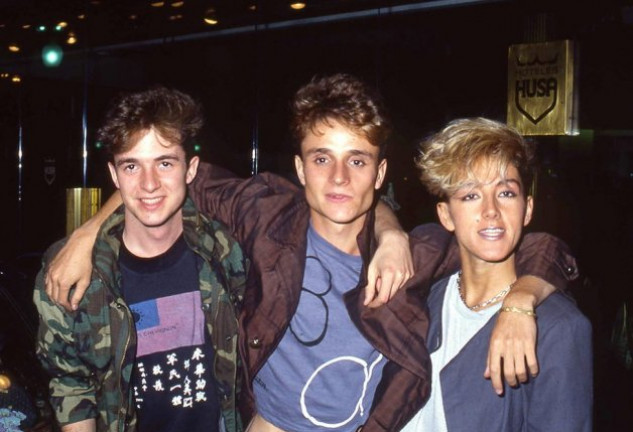
Mecano (Image from Revista Pronto posted on Instagram.)
Mecano: The beginnings
Mecano was formed in 1981 in Madrid, Spain, when brothers Nacho and José María Cano joined forces with Ana Torroja to create a band that fused pop and rock with electronic influences. Their first single, “Hoy No Me Puedo Levantar”, quickly captured the public’s attention, marking the beginning of a successful career.
Mecano Chronology
It explores the key moments of Mecano’s career, from its beginnings to its current legacy.

'81
Formación de la Banda
Mecano is formed in Madrid and releases its first single, establishing its presence in the Spanish music scene.

'84
Éxito Internacional
With the release of “Entre el Cielo y el Suelo”, Mecano achieved international success, consolidating their position as one of the most influential bands of the decade.

'92
Separación Temporal
After a series of successes, the band decides to take a break, leaving fans waiting for a possible comeback.

'98
Reencuentro y Gira
Mecano reunites for a special tour, reviving their classics and thrilling a new generation of fans.
Fun Facts about Mecano
Mecano, one of the most influential bands in Spanish pop music, has a history full of fascinating anecdotes. Did you know that their song ‘Hijo de la Luna’ was inspired by a gypsy legend? In addition, Ana Torroja is known for her distinctive voice, which has been compared to that of a soprano. During the recording of their album ‘Descanso Dominical’, the group spent long nights in the studio, perfecting every detail. Nacho Cano, besides being a talented musician, is passionate about yoga and has produced very successful musicals. José María Cano, on the other hand, is a renowned visual artist, having exhibited his work in prestigious art galleries.


Interesting Facts
One of the band’s most memorable anecdotes occurred during a concert in Mexico, where the energy of the audience was so intense that Ana Torroja had to stop to thank her fans for their warmth. It is also interesting to know that the song ‘Mujer contra Mujer’, which is about the love between two women, was a pioneer in addressing LGBT issues in Spanish pop music, generating a great social impact at the time.
Mecano Iconic Hits
Hijo de la Luna
Cruz de Navajas
La Fuerza del Destino
Mujer contra Mujer
Me Cuesta Tanto Olvidarte
Una Rosa es una Rosa
El 7 de Septiembre
Barco a Venus
Aire
Maquillaje
Un Año Más
No Hay Marcha en Nueva York
Dalí
Naturaleza Muerta
Los Amantes
El Fallo Positivo
Quédate en Madrid
El Peón del Rey de Negras
Mecano Complete Biography | Ana Torroja, Nacho Cano and José María Cano
Chapter 1 | How did Ana, José and Nacho meet?
Ignacio de la Macarena Cano Andrés, known to all as Nacho Cano, was born in Madrid on February 26, 1963 into a well-to-do family. He was the youngest of four siblings: Modesto Javier, María José and José María Cano Andrés, who became a well-known figure and was four years older than him. José María was born on February 21, 1959, the same year as Ana Torroja Fungairiño, future singer of Mecano, who was born on December 28 in Madrid.
Nacho’s family was neither rich nor poor, as his parents, Modesto Diego Cano and Emilia Andrés, were both educated. However, music was not a family passion, and they did not even have a radio at home. At home there was a Spanish guitar that his father had acquired in an unsuccessful attempt to learn to play flamenco, but José María and Nacho would take advantage of it.
José María was the first to feel a real attraction to music when, at the age of 13, he heard John Lennon’s iconic song Imagine. From then on, he began buying records and listening to music on a constant basis, a hobby that quickly rubbed off on Nacho.
Both brothers were very close and started playing guitar with the help of a Beatles songbook. Later, their parents hired a guitar teacher for them. José María was also part of the school choir, where he was a soloist, in addition to devoting himself to his other great passion, painting.
In 1974, when José María turned 15, he met Ana Torroja at a party, with whom he began a relationship shortly after. Ana, the eldest of six siblings, came from a good family. Her father, José Antonio Torroja Cavanillas, was the second Marquis of Torroja, and her grandfather, Eduardo Torroja, had been a leading world specialist in concrete construction. However, Ana was closer to her mother, María del Carmen Fungairiño, a nurse and housewife, whose death in 1985 deeply marked Ana when she was 24 years old and Mecano was at the height of its success.
Since she was a child, Ana showed artistic inclinations and sang in exchange for cookies while her father played the piano. Her relationship with José María lasted three years, until 1977, when he moved to Valencia to study architecture, while she remained in Madrid studying economics. However, neither of them completed their studies. José María left after two years to help his father as a textile representative, and Ana left Economics in 1980 to dedicate herself to her musical career.
During his adolescence, Nacho formed a rock band called Prisma, with which he tried to emulate the British sound of the 1970s. Although the band did not last long, Nacho joined José María, who was trying to develop a career as a singer-songwriter, as a backup guitarist. Ana Torroja also accompanied José María as second voice, although at that time they were already just friends.
The trio used to play at high school parties, performing covers of their favorite singer-songwriters and some of José María’s original songs, such as La cigarra y la hormiga and ¿Qué haces tú en el mundo? In 1979, at the age of 16, Nacho became interested in electronic music and learned to play keyboards. Meanwhile, Ana, who had not shown much interest in singing until then, developed a unique and increasingly prominent voice timbre. In those years, Ana combined her first steps in music with various jobs, such as babysitting, teaching Spanish to foreigners, and even working in a restaurant in Menorca during a summer, without imagining what the future held for her.
Chapter 2 | How was Mecano created?
In 1979, José María Cano entered under the name of “José María Cano y amigos” in the Spanish Television contest Gente Joven. During their participation, they performed the song ¿Qué haces tú en el mundo? composed by José María, along with a version of Al alba by Luis Eduardo Aute. Although they did not obtain good results in the contest, they continued to perform at parties in colleges and small local venues in Madrid. They still did it as an accompanied singer-songwriter, without forming a complete group.
In one of these venues, they were lucky enough to meet Miguel Angel Arenas, known as “Capi”, a producer and talent scout who had discovered artists such as Los Pecos and Alejandro Sanz. Capi offered them an audition, for which José María and Nacho Cano composed some songs. After listening to them, Capi proposed them to form a group and make Ana Torroja their vocalist. They presented their proposal to CBS, who agreed to record a song.
CBS, however, considered that the singer-songwriter style did not fit with their audience and asked them for something more youthful. Inspired after a weekend of partying, Nacho Cano wrote his first song, Hoy no me puedo levantar, later considered one of the group’s greatest anthems. In 1981, the record company opted for a week of radio airplay on 40 Principales, although the initial impact was small. It was his father who bought 100 copies of the single and distributed them in different radio stations, achieving that little by little the song became popular, until it reached 40,000 copies sold.
The name Mecano was born in an improvised way in the offices of the record company. They were looking for something that reflected their diverse style and family connection, inspired by the surname “Cano”, Ana’s architect grandfather and the concept of the Meccano construction game.
Aesthetics also played a key role in the group. Influenced by British pop-rock, they adopted the New Romantic style. For the cover of their first album, Ana wore a bun with wires and then chose to wear her hair short, becoming a symbol of the group. For their part, Nacho and José María wore their mother’s blouses, who was surprised to see them on the cover.
After the moderate success of the first single, CBS allowed the release of a second one: Perdido en mi habitación. This did even better, although it generated controversy because of the phrase “I’m looking in the drawer for a pill”, interpreted by some as a reference to drug use. Thanks to the impact of these songs, the magazine El Gran Musical named them Grupo Revelación de 1981.
Finally, the record label authorized the recording of a full album, which included sessions in London and the participation of producers such as Luis Cobos. In 1982, they released their first album, Mecano, whose lead single, Me colé en una fiesta, became a sales success with more than half a million copies in its first year. They tried to enter the Anglo-Saxon market with the version The uninvited guest, but it was not successful.
The album combined fresh lyrics written by Nacho, emotional stories by José María, Ana’s sweet voice and a mix of pop and synthesizers. Songs like Maquillaje set the trend and became hits of the summer of 1982.
However, not everything was easy. They received criticism that their image was sweetened or that their music was “for posh people”. Despite this, they began to tour Spain, with outstanding performances in Madrid and Barcelona. In the middle of the tour, Ana suffered a traffic accident that caused a crack in her coccyx. They also faced curious situations, such as being chased by jealous fans and boyfriends after the concerts. Ana, who by then had a partner, used to return to the hotel after the shows, while Nacho and José María took the opportunity to go out partying, which sometimes caused uncomfortable scenes the next day.
During the tour, an unusual event occurred: a rumor spread that Ana had died, which forced the singer to publicly deny it on television, causing great concern in her family. In spite of everything, the tour was a stage full of complicity between the three members of the group, who began to build the road towards their consecration as one of the most iconic bands of Spanish pop.

IA generated image
Chapter 3 | The record company fires Mecano
In 1983, Mecano released their second album, ¿Dónde está el país de las hadas? At this stage, the group renewed its aesthetics, approaching the post punk style that set the trend at the time. Although the album included one of the band’s biggest hits, Barco a Venus, which dealt with the subject of drugs, the reception was moderate, with some 200,000 copies sold.
Unfortunately, Nacho Cano began to get involved in the world of drugs, influenced by fame and constant partying. Ana Torroja, on the other hand, never let herself be carried away by these excesses, although she sometimes felt overwhelmed by work and the lack of time for her personal life.
The album also stood out for its mix of genres, as evidenced in La fiesta nacional, a pasodoble with electropop elements that included the voice of journalist Matías Prats. The songs composed by Nacho were characterized by their energy and dynamic rhythms, while those of José María Cano were deeper and more elaborate. However, the label’s preference for Nacho’s compositions began to strain the relationship between the brothers.
In a memorable moment, the then Prince of Spain, Felipe VI, publicly declared that Mecano was his favorite group.
This album transcended borders, being released in France and Germany and entering the charts in Latin American countries such as Mexico, Ecuador, Chile, Argentina, Peru and Colombia, where the group made a promotional tour in 1983.
In 1984, Mecano released their third album, Ya viene el sol. It was the first one they produced themselves, although tensions between Nacho and José María continued. Each produced their own songs separately: Nacho worked in London with a bigger budget allocated by the record company, while José María did it in Madrid. The situation reached such a point that the label proposed to Nacho and Ana to form a duo without José María, an offer that both flatly rejected.
Ana Torroja, who often mediated between the brothers, continued to evolve as a singer, expanding her vocal range and adding new nuances, as can be seen in the song Aire. In addition, for the first time she participated as a composer in the song Mosquito, collaborating in the chorus at Nacho’s request. However, this experience was not satisfactory for her and she did not repeat it.
During that time, Ana also became interested in bodybuilding, participating in international championships and even being invited to the exercise program Puesta a punto, hosted by Eva Nasarre. Among the album’s hits was Hawaii-Bombay, a song that quickly became a group classic.
The tour of Ya viene el sol was extensive, covering more than 75,000 kilometers. In 1984, the group closed the year with a television special and performed for the first time at the Palacio de los Deportes in Madrid. However, some concerts of the tour failed to fill the venues, and, despite all the efforts, this album turned out to be the band’s least successful.
Due to the low sales, the record company decided to terminate the contract with Mecano, although before that they released the fourth album agreed upon: Mecano en concierto, a live album that was released in 1985.
That same year, the group collaborated with Greenpeace in the song Cortita para antes que nos abandone el mar and performed in Strasbourg to celebrate Spain’s entry into the European Economic Community.
Meanwhile, Nacho Cano combined his work in Mecano with parallel projects, such as producing and composing for other artists. Among them, he wrote the famous song No controles for Olé Olé and worked with La Unión. In addition, Nacho opened his own recording studio, called Fairlight, consolidating himself as a reference in the music industry.
Chapter 4 | Consolidation and hatching
In 1986, Mecano began a new stage under the Ariola Eurodisc label with the release of their album Entre el cielo y el suelo. This album marked a significant change in the group’s aesthetics, which adopted a more austere style with jeans, jackets and leather boots. However, the most notable change was the rise of José María Cano as a prominent composer, creating emblematic songs such as Cruz de navajas, Me cuesta tanto olvidarte and Hijo de la luna.
Cruz de navajas became a turning point for Mecano, with its innovative mix of blues, congas and saxophone, and received the award for best song of the year in Spain in 1987. Me cuesta tanto olvidarte became one of the most beloved ballads by fans, while Hijo de la luna, a tragic story inspired by gypsy superstitions, transcended frontiers to become the most covered song in the band’s discography.
The album was a resounding success, surpassing one million copies sold and making Mecano the first Spanish group to reach such a figure. This achievement was boosted by the group’s immense popularity in Latin America, where they filled stadiums and topped the charts. Their success was such that, during their visits to the continent, they required a military escort.
In 1987, Mecano made a successful tour of Spain and Latin America, consolidating their place as pop stars. However, the relationship between the Cano brothers remained tense, marked by constant creative clashes. Despite this, their artistic rivalry boosted the quality of their compositions.
In 1988, Mecano released Descanso dominical, recorded at the iconic Abbey Road Studios in London. This album surpassed their previous record, reaching 1.3 million copies sold in Spain alone. Among its most outstanding songs are No hay marcha en Nueva York, the swing with which the album was presented, and Los amantes, which, although at the time did not have great repercussion, became a classic over time.
Mujer contra mujer, a ballad that addressed lesbianism with an invitation to respect, marked a milestone in the group’s career and faced censorship in some countries. Other iconic songs on the album include Un año más, a New Year’s hymn, and Eugenio Salvador Dalí, a tribute to the celebrated Catalan painter. Also notable was La fuerza del destino, whose videoclip starred a young Penélope Cruz, who would later become Nacho Cano’s partner.
Mecano not only triumphed in Spain, but also in the international market. In 1989, they released Figlio della luna in Italy, reaching number one in sales. In 1990, Une femme avec une femme topped the charts in France for eight consecutive weeks, consolidating the group as a European phenomenon. They also made it to the top of the charts in Holland, Belgium, Switzerland and Germany.
Between 1988 and 1989, Mecano made an ambitious tour of more than 130 concerts, covering Spain, Latin America, the United States and Australia, with more than 1.5 million spectators. Mecanomania” reached its peak, and the group was recognized as the most influential Spaniards of the 80s. In addition, they obtained two Guinness World Records: one as the best-selling group in Spain, with more than five million copies, and the other for 83 consecutive weeks in the charts.
Despite their success, the pressure took its toll on the band members. After the tour, they decided to take a sabbatical year to recharge their batteries. Ana Torroja sought tranquility in Australia and New York, while Nacho Cano traveled to India, where he met Mother Teresa of Calcutta, who inspired him to use his fame to help others. For his part, José María Cano explored new personal projects.
This period of rest marked a pause in the group’s trajectory, although Mecano continued to be a reference in Spanish-language music.

IA generated image
Chapter 5 | Mecano's slow agonizing
Amidst rumors of separation due to the deteriorating relationship between brothers Nacho and José María Cano, the group Mecano returned in 1991 with a new album titled Aidalai, the first in the history of Spanish music to be released simultaneously all over the world. To celebrate, they organized a party at their parents’ house in Somosaguas, attended by 1,000 people.
Aidalai contained a variety of compositions, from minimalist tracks such as Sentía, a bossa nova accompanied only by two acoustic guitars and maracas, to more complex pieces such as Naturaleza muerta, which includes a stunning orchestral string arrangement, considered one of the most beautiful songs written by José María Cano. There was also room for his characteristic techno-pop sound, as in El fallo positivo, a song that addressed the AIDS issue and in which Nacho Cano was the vocalist. The album also included the emotional Tú, one of the band’s most sensitive songs, which José María Cano considered perfect, and Dalai Lama, written by Nacho after an inspiring trip to Tibet, which narrated the life of the Dalai Lama and China’s invasion of Tibet.
The album produced two major hits: El 7 de septiembre, written by Nacho Cano and dedicated to his ex-girlfriend Coloma Fernández, which won the award for best song of the year in Spain in 1991, and Una rosa es una rosa, a song written by José María Cano inspired by the famous phrase of writer Gertrude Stein. Aidalai sold 1,000,000 copies in Spain and 3,500,000 worldwide, with its international success taking the album to places like Japan, Taiwan, Algeria and Saudi Arabia, and being recorded in Italian and French.
The album’s promotional tour lasted from 1991 to 1992, with more than 90 concerts in Spain, Europe and Latin America, all of them sold out. The tour coincided with events such as the 1992 Barcelona Olympic Games and Expo 92 in Seville, although it was also marked by fatigue, as Ana suffered from laryngitis and some concerts had to be postponed. Among the most memorable concerts were the three they gave at the Plaza de Toros de Las Ventas in Madrid and another two in Barcelona, as well as their performance at the Viña del Mar Festival in Chile, which was broadcast throughout Latin America. A very special moment of the tour was when they met the Dalai Lama in Chile and showed him the video clip of the song Dalai Lama, which moved him deeply.
However, despite the special connection with their audience, internal tensions increased. Nacho Cano wanted to put on a different show than his brother, which led to frequent arguments, while Ana was emotionally drained by the situation. On September 29, 1992, the band ended the tour, which, unexpectedly, would be their last concert.
That year, Mecano received a double honor: Montserrat Caballé covered their hit Hijo de la luna, and Renault launched a version of the Clío car called “Clío Mecano”. After the tour, the three members of the group announced a three-year break, with the intention of preparing a new album. However, the band gradually began to dissolve due to constant arguments between José María and Nacho Cano, and Ana’s emotional fatigue. In 1993, when they received the award for best group, Ana was the only one to attend, as Nacho was living in New York and José María in London.
Chapter 6 | Together or apart
In 1994, Nacho Cano released his first solo album entitled Un mundo separado por el mismo dios. An almost completely instrumental album, inspired by his girlfriend at the time, Penélope Cruz, in which songs such as El patio and El profesor de danza stood out. At the presentation of the album, both Ana Torroja and José María Cano were present. The following year, Nacho went on tour to present the album, and during a performance in Madrid, he invited José María on stage to play together Hoy no me puedo levantar.
In 1996, Nacho Cano released his second solo album, El lado femenino, which addressed relationships from a female perspective. All the songs were performed by female vocalists, such as Vivimos siempre juntos, sung by Mercedes Ferrer. This song became the most popular of her solo albums, reaching an immediate success, similar to that of any Mecano single.
For her part, Ana Torroja took two years to prepare her solo album, as she wanted to establish a very different style from Mecano. Her first album, Puntos cardinales, was released in 1997 and included mid-tempos and ballads, including A contratiempo and Como sueñan las sirenas, which reached number one in sales.
José María, who had moved to London, devoted himself entirely to composing an opera, sponsored by Plácido Domingo. His opera, entitled Luna, was recorded in New York with great performers such as Ainhoa Arteta, Renée Fleming, Teresa Berganza and Plácido Domingo himself. Although the opera was well received by the public, selling more than 125,000 copies, the critics in the lyric world were very negative, even boycotting its premiere at the Teatro Real in Madrid. On a personal level, José María had a son, Daniel, in 1995 with the model Marta Gómez Visedo, whom he married in 1998.
Despite being focused on their solo projects, the three members of Mecano had a commitment with the record company to release another album as a group. So, they met again in the studio to record seven unreleased songs to be included in the compilation ANA | JOSE | NACHO, released in 1998, when Nacho was 35 years old. The first single from the album was El club de los humildes, composed by Nacho to reflect his feelings about the group’s comeback. Other songs on the compilation were Cuerpo y corazón, about the world of prostitution; Otro muerto, which deals with death and terrorism; Stereosexual, an amusing story about a man’s doubts about his sexual orientation; El mundo futuro, which expresses concern about an increasingly superficial life; Esto no es una canción, about how drug addiction destroys a person’s life; and Los piratas del amor, about promiscuous and unfaithful men.
The album was a notable success, selling a million copies worldwide, but it did not reach the best-selling level of Mecano’s previous albums. This was due to the lack of promotion by both the record company and the group itself, and the lesser dedication they put into the new songs.
Of the three, José María was the least convinced to continue with Mecano. After his son Dani was diagnosed with Asperger’s, this became his main priority. In addition, musically, he hoped that, like him, the rest of the group would lean towards other styles, such as classical music, but that did not happen. At the Premios Amigo awards gala in 1998, José María announced his definitive departure from Mecano, which led to the dissolution of the group. Neither Ana nor Nacho knew that José María was going to make this announcement, which surprised them deeply, although both accepted the decision and continued their separate ways.

IA generated image
Chapter 7 | After Mecano
Although José María had not put much effort into the compilation ‘Ana|José|Nacho’, the truth is that it helped him to get out of the difficult economic situation in which his opera Luna had left him. Although he presented Luna at the Palau de la Música in Valencia along with Plácido Domingo and Ainhoa Arteta, in the following years he devoted himself to production and composition work for other artists through the company he had created, Ediciones Musicales Santa Teresa.
Ana Torroja, who had put aside the promotion of her first album due to the compilation and a possible tour, resumed her career and started working on her second solo album, in which she herself would compose almost all the songs. Pasajes de un sueño was released in 1999, with a marked Latin and cosmopolitan character, having Ya no te quiero as the lead single.
As part of the promotion of this album, Torroja started the Girados tour with Miguel Bosé in 2000, touring Spain, the United States and part of Latin America. Ana Torroja commented that curiously it was not until 2000, in one of the Girados concerts in Toledo, that her father told her that he was very proud of her, and that Mecano was so big that it was hard for him to recognize his daughter in the group.
For his part, Nacho Cano released in 1999 a new album titled Amor, Humor, where he mixed romanticism with humor. In most of his songs he counted on the rock voice of Mercedes Ferrer, although in the single ‘Sube, sube’ he was accompanied by Natalia Zisa.
At the end of 2000, José María released his new album under the name of Josecano. It would be his only solo pop album due to its low success. However, it included a beautiful song dedicated to his son Dani, ‘Y ahora tengo un novio’.
In 2001, José María would compose the anthem for Real Madrid’s centenary. Interpreted by Plácido Domingo, it was presented at the Santiago Bernabéu stadium on the day the club celebrated its 100th anniversary.
In 2001, Ana tried to regain her French audience by releasing her album in that country, but it was her biggest musical failure. That same year, Nacho Cano released under his own label what would be his last pop album simply titled Nacho Cano, with the beautiful single ‘El amargo del pomelo’.
Two years later, in 2003, Ana continued with her career and released Frágil, an album with which she would go on a new solo tour.
Meanwhile, Nacho had already been very committed to the underprivileged in India for some years. In 2002 he adopted an Indian girl and participated in two documentaries called ‘Calcutta 1 and 2’ in order to raise funds. Later, he would create a foundation for the help of Indian women, Sabera Foundation, and an orphanage. As part of his charity work, he produced the album ‘Sabera: Voices of Hope’, with the participation of Sting, Ricky Martin, Alejandro Sanz and other great artists. However, he eventually had to disassociate himself from the foundation due to misuse of funds and several internal clashes.
Chapter 8 | Ana, José, Nacho today
In 2004 a biography of Mecano was published called ‘La fuerza del destino’. Meanwhile, Nacho Cano was putting music to the wedding of the current kings of Spain, Felipe and Letizia.
Nacho had always had the desire to turn Mecano into a musical. He worked for a long time on it and the fruit of his efforts came in 2005, when ‘Hoy no me puedo levantar’ finally premiered in Madrid’s Gran Vía. Both Ana Torroja and José María Cano attended the premiere. Nacho directed the musical for several years, with absolute success. He even made a version for children under the title ‘En tu fiesta me planté’.
Thanks to the success of the musical, in 2005 Mecano’s complete discography was re-released and even a karaoke videogame completely dedicated to them, Mecano SingStar, was launched.
That same year, Ana Torroja had her only daughter, Jara, with her husband, Rafael Duque, whom she married in 2003, keeping her personal life private, as she and the other members of Mecano had always done.
In 2006 a small reunification took place when Ana and Nacho performed in the Plaza de Colón, in front of 5,000 people, interpreting ‘Me cuesta tanto olvidarte’ on the World Day Against Drugs.
Ana, who had had a smash hit in 2004 with ‘Duele el Amor’, a collaboration with Mexican singer-songwriter Aleks Syntek, decided to cover her favorite Mecano songs with Aleks as producer. The new version of ‘Los amantes’ was a hit. The tour of the album was a complete sell-out, showing the enormous desire of the public to hear his songs live.
José María, after a complicated divorce process that almost led him to ruin in 2005, decided to dedicate himself professionally to the world of painting, adopting the artistic name Cano de Andrés. His work is based on the technique known as encaustic, which gives his works an aspect of sculpture rather than painting. He exhibited for the first time in Spain in 2007 and later in Berlin and Prague, with some of his works reaching 75,000 euros, which allowed him to recover economically. Since then, he has not stopped making exhibitions of all kinds, such as portraits, drawings, prints and contemporary art, in various parts of the world.
In 2009, without it being the return of Mecano, Nacho, José María and Ana went back into the recording studio to record a song composed by José María in 1988, ‘María Luz’, which was published in the Siglo XXI compilation.
Nacho had taken a liking to musicals, so he began to write one. He not only composed music and lyrics, but also the libretto and stage development. Thus, in 2008 he premiered ‘A: un musical de Nacho Cano’, a fantasy fable with moral undertones that ran for a year in Madrid and Barcelona. In 2012, he composed the anthem for Madrid’s Olympic bid. Although Madrid was not chosen, the theme had an excellent reception. She also set up a dance group called Mecandance, which danced to electronic versions of Mecano’s songs in clubs like Amnesia and Kapital.
Ana, in 2008, experienced the scare of her life when she was traveling with her friend and model Esther Arroyo and three other people, and their vehicle collided head-on with a van. One of Ana’s friends died and the rest survived. Ana broke two vertebrae and her collarbone, in addition to suffering psychological damage and post-traumatic stress. Two years later, in 2010, Ana recovered and released her fifth solo album, ‘Sonrisa’, an album full of positivity, with the eponymous single. The album went to #1 on iTunes in just a few hours. Although Ana continued to collaborate with many artists over the years, she didn’t release a new full-length album until 2021, with ‘Mil Razones’, which marked her return to electronic sounds. Just when, after the death of her father, the Marquis of Torroja, she became a marquise.
In 2021, Nacho Cano received the honor of being named Knight Grand Cross of the Order of the Dos de Mayo. From a young age he had been fond of different variants of yoga, especially bikram, of which he was an instructor. He lived between Miami, Ibiza and Madrid, and was dedicated to his musical Malinche, a project that brought him many headaches.
Malinche is a show in the key of diversity and multicultural celebration, which addresses the role in the history and culture of Mexico of the Spaniards Hernán Cortés and the conquistadors. The show was to premiere in a new venue to be built in Madrid, a pyramid of 6,000 tons of steel, but neighborhood rejection and accusations of favoritism by some political parties caused it to be moved to another venue, IFEMA. In 2024, Nacho was arrested for the alleged irregular introduction of immigrants into the country to practice in the musical Malinche. He was very angry and made very strong statements against the police who arrested him. In 2024, he was still awaiting trial.
On the musical front, in 2024, Nacho premiered Ibiza Hippie Heaven, a dinner show reflecting aspects of hippie Ibiza from the 1960s, at the Pereyra theater in Ibiza.
For his part, José María Cano currently resides in Lisbon, in the Palace of San Vicente de Fora, which he acquired in 2017. He is recognized as one of the most valued artists in art galleries such as Sotheby’s. He exhibits worldwide, as he did in 2023 with his recent exhibition ‘Differences and similarities between truth and reality’ in Kazakhstan.

IA generated image
Conclusion
After Mecano’s eleven-year career and sales exceeding 25 million records worldwide, no one doubts that they are the most important group in the history of Spanish pop music. Their songs have not stopped playing on national and international radio stations decades later and it is all thanks to the magical songs of two musical geniuses, brothers José and Nacho Cano, and one of the best Spanish voices and performers of all time, Ana Torroja. We will all pass but their music will remain.
Javier Concha (Trembol)


