

LUCIANO PAVAROTTI
STORY
PLAYLIST

Luciano Pavarotti | The best tenor in history

The most successful tenor of all times turned opera arias into number 1 on the charts and filled stadiums like a rock star. But the person went beyond that, his kindness, optimism and huge smile filled all the space, maybe that’s why he had so many extramarital affairs, took refuge in food, was superstitious and even almost died at the age of 12. A story not to be missed!

TABLE OF CONTENTS
Trembol Card Luciano Pavarotti
- 🗿 Name: Luciano Pavarotti
- 🎂 Year:He was born on October 12, 1935 in the outskirts of Modena, Italy.
- 👫 Genres: Opera.
- ✍️ Autograph:

- 🎺 Instruments: Voice. Pavarotti is a light lyric tenor.
- 💿 Discography:Pavarotti’s discography is very extensive, between operas, studio albums and compilations, there are more than 100 albums published during the 50 years of the tenor’s career.
- 🌐 Official Website: pavarottiofficial.com
- 🗣 Luciano Pavarotti Social Media: Facebook, X, YouTube and Instagram.
I love music and I can’t live without it, without the action that surrounds it. I love people, I love to communicate and I love applause. It’s the best thing for a man
Luciano Pavarotti
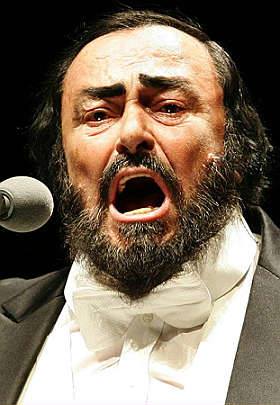
Luciano Pavarotti (Facebook Images)
Other music stories you’re going to love
Andrea Bocelli. The blind tenor
Tchaikovsky. The greatest Russian composer

Joaquin Rodrigo and the Aranjuez concert
Luciano Pavarotti | Biography and Music
Chapter 1 | A childhood marked by war and a nail
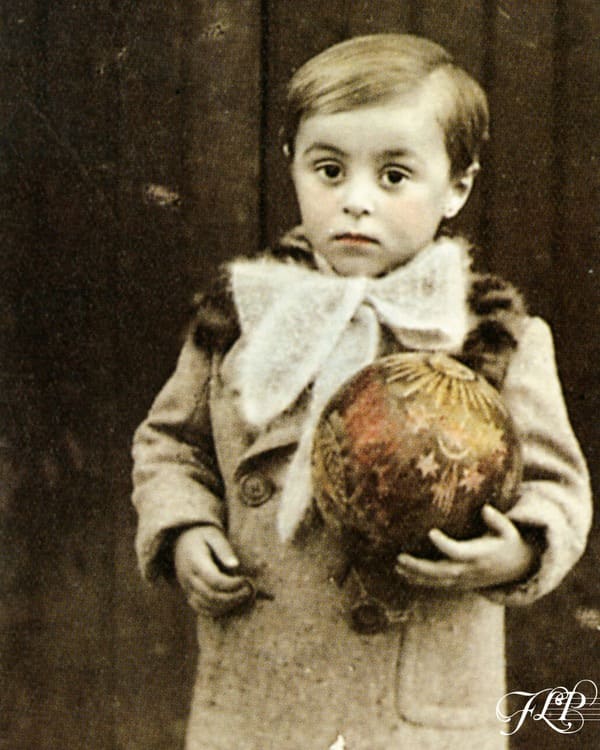
Luciano Pavarotti as a kid (Facebook Images)
Luciano Pavarotti was born on October 12, 1935 on the outskirts of Modena, Italy. His father, Fernando Pavarotti, was a baker and amateur tenor, while his mother, Adele Venturi, worked in a cigar factory. The family was completed with the birth of his younger sister, Gabriella.
Although they did not have much money and lived in a small two-room apartment, his childhood was a joyful one. Being almost the only boy in the neighborhood, he was always surrounded by women.
He sang for the first time at the age of 4, performing ‘La donna è mobile’. At the age of 8, in 1943, World War II came to Modena, forcing his family to flee and take refuge in a nearby farmhouse. There they lived crammed into a single room until, in 1945, the Americans liberated the region.
Pavarotti enjoyed the countryside and developed a great passion for agriculture, something that, according to many, contributed to his country character.
Another of Luciano Pavarotti’s great passions, like that of many Italian children, was soccer. He played as a goalkeeper and striker, although he soon gave up the idea of being a professional when he realized he was not good enough.
His father, Fernando, had studied to be a tenor, but never pursued that career seriously because of his nerves about the stage. Luciano always considered it a great pity that his father did not try, as he believed he had a voice even better than his own. It was he who passed on to him the love for lyrical singing and encouraged him to study music as a child, something he did for seven years.
His greatest childhood idol was the tenor Giuseppe Di Stefano, whom he deeply admired. He also loved Mario Lanza, whom he constantly imitated in front of the mirror.
At the age of 9, Luciano joined his father in the choir of a small local church. At the age of 12, he had a near-death experience. While playing soccer barefoot, he was pricked by a rusty nail and contracted tetanus, putting him in a coma for two weeks. His family feared the worst and even called a priest to give him last rites. Miraculously, he recovered, and from then on felt life as a gift. That experience would forge the humble, optimistic and joyful attitude that always characterized him.
To celebrate his recovery, his father took him for the first time to the opera in Modena to see the great tenor Beniamino Gigli. Luciano was totally fascinated and left the theater with a clear idea in his mind: he too would be a great tenor.
Chapter 2 | Pavarotti’s operatic beginnings
Luciano Pavarotti graduated from the Scuola Magistrale without knowing what he would do next. His father convinced him to study teaching, and so he did. He taught in an elementary school for two years. He always enjoyed the curious and innocent spirit of children, but it was clear to him that his true passion was music.
His mother was a great support and constantly encouraged him to continue singing, assuring him, “You have a gift.” Finally, between them, they convinced his father to allow him to give it a try. Thus, in 1954, at the age of 19, he began to study music with Arrigo Pola, a respected teacher and tenor who, being a friend of his father’s – for they had studied singing together – offered to teach him without charge.
A little before that, in 1952, when he was only 17 years old, Luciano met the love of his life, Adua Veroni. She was 16 years old, one year younger than him. They met at a party and, according to him, it was love at first sight, although on Adua’s part it was not so immediate. Pavarotti even sang “La rondine al nido” to impress her, but she hardly paid any attention to him.
Without giving up, he devised a way to get closer to her: as Adua was a much more applied student than he was, he managed to make her his tutor. Little by little, he succeeded in winning her over. They became engaged in 1955, although they would not marry until 1961, after living for a few months in a shared house due to lack of money. In those years, both worked as teachers, and their salaries were barely enough to cover expenses.
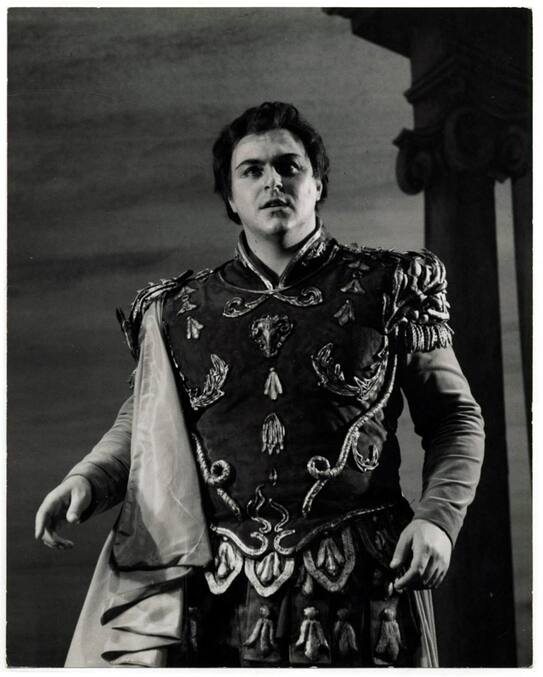
Luciano Pavarotti (Facebook Images)
Luciano Pavarotti and his father, Fernando, were members of the Corale Rossini, a male voice choir from Modena. In 1955 they traveled to Wales to participate in a choir competition, where they won first prize. That triumph filled him with happiness and consolidated his firm intention to become a professional singer.
He continued his singing studies with tenor Arrigo Pola, until 1957, when his teacher moved to Japan. Determined to continue his training, he began to study with his great childhood friend, the future soprano Mirella Freni, under the tutelage of Maestro Ettore Campogalliani. Luciano and Mirella shared practically their entire lives: their mothers worked together, they attended the same kindergarten, they studied together and their operatic careers developed in parallel. In addition, Mirella’s husband, Leone Magiera, a pianist and conductor, helped him throughout his career to prepare for his operatic roles.
To support herself while studying, in addition to working as a teacher, she also sold insurance. People were surprised to see such a big man, with a huge smile, coming to their homes to offer them policies. At the same time, he continued to give small recitals in different cities, although he did not get paid.
In 1960 he entered a singing competition whose prize was a place in a new opera production. He was confident that he would win, but a nodule on his vocal cords prevented him from shining in the performance, and he lost. The frustration was so great that she decided to stop singing. However, that break was good for him both physically and mentally. The nodule healed and she felt a release that allowed her true voice to emerge.
The following year, in 1961, he entered the same competition again and this time he won, obtaining the role of Rodolfo in Puccini’s La bohème. Thus, in 1961 he made his debut at the Romolo Valli municipal theater in Reggio Emilia. Shortly after, she repeated the performance in Modena. The joy was even greater because Mirella also participated in the opera and her husband Leone directed the production. Although the performances did not have great repercussions, her mother was enthusiastic and proud.
With the little money she earned – equivalent to about 90 euros or dollars today – and the salary that Adua, her fiancée, was still earning as a teacher, they were able to afford the wedding. They married in 1961 and lived close to their families. Thus, when Luciano had to travel to perform, Adua was not left alone.
In 1962, during the difficult birth of their first daughter, Lorenza, Luciano was traveling. Adua became seriously ill and almost died, but finally recovered and the baby was born healthy. In the following births, Cristina in 1964 and Giuliana in 1967, he was not present either. This time it was superstition: since everything went well the first time without him, she did not want to tempt fate.
The couple had their three daughters in a short period of five years. When they were little, they decided to travel together to their performances. The girls, at first, screamed in fear when they saw their father “die” on stage, but eventually they got used to it.
When it was time for the girls to start school, Adua stopped traveling with them. It was a difficult time for everyone. Luciano, known for his charisma and strong presence, left a big void at home every time he left, something his daughters felt deeply.
Luciano Pavarotti’s first international appearance was in Belgrade with La traviata, a work he would repeat in 1963 at the Vienna State Opera. That same year he also performed La bohème and Rigoletto in the same city.
At the age of 28, he gave his first concerts in the United Kingdom, starting in Ireland and then unexpectedly making his debut at Covent Garden, London, alongside soprano Joan Sutherland in La bohème. This happened because the lead tenor fell ill and Luciano was called to replace him.
That performance received good reviews, and he soon began to be spoken of as a talented young tenor bursting onto the operatic scene.
Joan Sutherland played a crucial role in his career taking off. In 1964, she was looking for a young, high tenor for a tour of Australia. Luciano, who was already quite portly, was perfect for the role. Together they undertook a two-month tour of Australia, performing 40 performances. This experience not only consolidated his technique, but also catapulted him to international recognition.
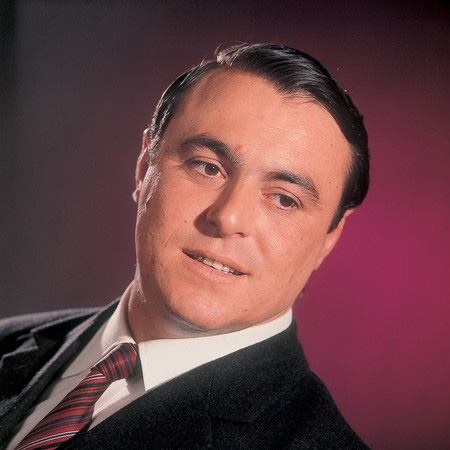
Luciano Pavarotti (Press Image)
During that tour, Luciano Pavarotti won his first million Italian lire, the equivalent of about 30,000 euros or today’s dollars. When he returned home, he went into his room with his wife and together they threw the bills into the air in excitement. They had never seen so much money together.
The collaboration with Joan Sutherland was key in his growth as a singer. Thanks to her, he significantly improved his breathing technique, learning to control his diaphragm before facing difficult notes.
Pavarotti felt that every time he sang, he captivated the audience with his lyric tenor voice, characterized by a pure, crisp and soulful sound. His distinguishing mark was his impressive “C”, technically known as “C-sharp” (C5), an extremely high note within the tenor tessitura, delivered in full voice and without falsetto.
In 1964, he made his first recording with the Decca label, where he would remain throughout his career. The record included, among other pieces, “E lucevan le stelle” (“And the stars were shining”) from the opera Tosca. Throughout the 60s and early 70s, he recorded 11 operas and Verdi’s Requiem, many of them with Joan Sutherland, consolidating an unforgettable artistic collaboration.
Her debut in the United States took place in 1965, at the Florida Grand Opera, performing Donizetti’s Lucia di Lammermoor, again with Sutherland.
Shortly after, he made his debut at La Scala in Milan with La bohème, accompanied by his childhood friend Mirella Freni, conducted by the legendary Herbert von Karajan. With Karajan he forged a solid and fruitful friendship. Her interpretation of “Che gelida manina” (“What a cold little hand”) became one of the most iconic in history.
After another extensive tour of Australia in 1966, he returned to La Scala to play Tebaldo in I Capuleti e i Montecchi (The Capulets and the Montagues).
His most notable performance of that era came in 1969, with I Lombardi (The Lombards) in Rome. The performance was recorded and widely distributed, as were other recordings of The Capulets and the Montagues, Donizetti, and arias by his favorite composer, Giuseppe Verdi. Among them was The Elixir of Love, again with Joan Sutherland. All these recordings were well received, consolidating her international reputation.
Pavarotti O’ Sole Mio
In 1972, at the age of 37, Luciano Pavarotti achieved international success with La fille du régiment (The regiment’s daughter). He performed it first at the Royal Opera House in London, then at La Scala in Milan, and finally at the Metropolitan Opera in New York.
Audiences were astonished by the ease with which she reached the famous “high C” in the aria “Ah! mes amis” (“Ah! my friends”). Her performance at the MET was so impressive that she achieved a record seventeen curtain raisings, a recognition rarely seen.
Not since the days of Enrico Caruso – one of his greatest idols – had a tenor captured the public’s attention in such a way. Fame brought with it an avalanche of fan letters from all over the world. His wife, Adua, was in charge of answering them all. She also managed his relations with Italian theaters and coordinated with his new representative in the United States, Herbert Breslin, who would play a key role in the expansion of his international career.
Herbert Breslin was the one who had the idea that Luciano Pavarotti began to give recitals. The first one took place in 1973 in Missouri. Pavarotti found himself alone on stage, accompanied only by a piano, without makeup, without opera costumes and without the support of other singers. He was extremely nervous and did not know what to do with his hands. At that moment, his manager took the white handkerchief he was carrying in his pocket and suggested that he hold it tight throughout the performance. He did so, and from then on that white handkerchief became his lucky charm and an unmistakable symbol of his concerts. He held it tightly while singing and, incidentally, used it to wipe his sweat.
Pavarotti confessed to being very superstitious since the beginning of his career. To his white handkerchief he added a series of rituals: he avoided going under the stairs, he could not bear to see salt spilled on the table, he forbade the color purple during the performances and he always looked for a bent nail in the theater before each performance. He kept it with him during the performance, believing it would bring him luck. This superstition came from the Italian expression “toccare ferro” (touching iron), equivalent to “touching wood”. Moreover, he connected this belief with the rusty nail that, in his childhood, almost cost him his life but from which he managed to miraculously recover.
Among his most notable performances in the early 1970s were The Favourite, alongside Fiorenza Cossotto, and I puritani (The Puritans), with Joan Sutherland. In the middle of the decade, he took on even more demanding roles, such as Manrico in Il trovatore (The Troubadour) and Radamès in Aida, showing greater depth and maturity in his voice.
By then, he had already earned a fortune. He bought a large villa in Modena for his and his wife’s family, and also fulfilled one of his dreams: to have a house overlooking the beach at Villa Giulia. Despite these accomplishments, he spent very little time at home, except during the summer.
Several of his performances began to be broadcast on television. The first was La bohème in 1977, from the Met in New York. Before going on stage, she used to nervously pace behind the curtain repeating, “We’re going to die, I’m going to die.” The nerves, though uncomfortable, were for him a sign that what he was doing really mattered to him. His strategy to overcome them was to maintain an optimistic attitude. That television broadcast reached one of the largest audiences for an opera at the time.
In those years, he began to receive several Grammy awards, as well as gold and platinum records for his recordings.
Her debut at the prestigious Salzburg Festival came in 1976. He returned to the festival in 1978 and later in 1983 with Der Rosenkavalier (The Knight of the Rose), in addition to giving recitals in 1985 and 1988.
Pavarotti’s definitive consecration came in 1979 with his interpretation of Tonio in Gaetano Donizetti’s opera La fille du régiment (The Daughter of the Regiment). He managed to execute nine consecutive C notes, which led him to be on the cover of The New York Times, where he was proclaimed “The King of the C in the chest”.
However, fame and constant travel often made him feel a deep loneliness. To combat this, he used to invite everyone to dinner after the shows. In addition, he would carry a suitcase full of Italian food – pasta, mozzarella, prosciutto… – and he would look for hotels that had a small kitchen in the room so he could cook for himself. Food was one of his great passions. Even when his doctor forbade him to eat more than one meringue a day -one of his favorite sweets-, Pavarotti asked a pastry chef to prepare him a giant meringue of half a kilo, so he could comply with the medical recommendation by eating “just one”.
Translated with DeepL.com (free version)
In 1978, Luciano Pavarotti gave a legendary solo recital at Lincoln Center. That same year he starred in his legendary performance of Pagliacci (Clowns).
In 1979, while teaching a masterclass at the Juilliard School in New York, he met the young soprano Madelyn Renée, whom he took under his tutelage as a student. In addition to her apprenticeship, she acted as his secretary and accompanied him on his travels. What began as a professional relationship eventually turned into a love story, even though he was still married. Their relationship lasted almost 7 years. Madelyn described Luciano as an attentive and cheerful man, although also very serious and disciplined with his work, his agenda and, above all, his inseparable handkerchiefs, to the point of getting angry if something was not in place.
That same year, after 14 years of absence, he returned under the direction of Herbert von Karajan to the Vienna State Opera with Il Trovatore. Pavarotti collaborated with great figures such as Joan Sutherland and mezzo-soprano Marilyn Horne, with whom he achieved some of his best recordings at the height of his voice. Among them stand out: Lucia di Lammermoor, La fille du régiment, La Traviata, Il Trovatore, Rigoletto, L’elisir d’amore, I Puritani, La sonnambula, Maria Stuarda, Beatrice di Tenda and Turandot (conducted by Zubin Mehta), where he sang for the first time the iconic aria Nessun dorma, which would later become the most popular piece of his career.
Luciano had years earlier signed an exclusive contract with the Decca label, although he also released recordings through a label created by his wife. To avoid legal problems, he asked Decca to buy his wife’s label, thus ensuring that everyone would be satisfied. Among all his interpretations, Pavarotti always confessed that the opera he most enjoyed performing was L’elisir d’amore. The main reason was that his character did not die -something uncommon for tenor roles- and because he felt deeply identified with the role of a humble peasant, a figure close to his roots.
In 1982, Pavarotti ventured into the big screen with the film “Yes, Giorgio”, where he played Giorgio Fini, a famous opera singer who loses his voice during a tour of America and falls in love with a throat specialist who helps him recover. That same year, he decided to create the “Pavarotti International Voice Competition for young singers”, whose prize was to perform alongside him. The second edition of the contest took place in 1986, coinciding with the celebration of his 25-year career. Together with the winners, he traveled to China to perform La bohème and there he gave the inaugural concert at the Great Hall of the People in front of 10,000 people, impressing the audience by singing 9 high C’s without apparent effort.
During that time, she faced difficult times on a personal level. His daughter Giuliana, on her 15th birthday, was diagnosed with a life-threatening illness that caused progressive paralysis. Luciano cancelled his entire schedule to be by her side. Fortunately, after an operation, Giuliana recovered.
In the mid-1980s, Pavarotti returned to two key stages in his career: the Vienna State Opera and La Scala in Milan. There he performed La bohème, L’elisir d’amore, Luisa Miller, Un ballo in maschera (Masked Ball) and Aida, the latter recorded on video, where he received a 2-minute ovation on opening night.
Luciano never showed interest in learning new roles in the French or German repertoire, with the exception of 1982, when he triumphed at the Metropolitan Opera in New York with Mozart’s Idomeneo. Curiously, it was a role he had played in his early days. Throughout his career, Pavarotti remained faithful to his essence as a lyric tenor and only took on dramatic roles on rare occasions, always seeking to preserve the flexibility and freshness of his voice, known for its natural facility for the treble.
In 1988, he was named Knight of the Grand Cross of the Order of Merit of the Italian Republic, a recognition that highlighted his impact not only on music, but also on Italian culture.
Luciano Pavarotti’s popularity only grew over the years, especially thanks to his interpretation of the aria “Nessun dorma” from Giacomo Puccini’s Turandot, which was used as the theme song for the BBC’s coverage of the 1990 Football World Cup.
“Nessun dorma” became a worldwide hit, even more so after the first concert of The Three Tenors, together with Plácido Domingo and José Carreras, conducted by Zubin Mehta. The concert took place on the eve of the World Cup final in the ancient Baths of Caracalla in Rome. Interestingly, all three lived in the same building in New York. José Carreras had just overcome leukemia and wanted to return to the stage with a big celebration. They were asked to sing together to celebrate the World Cup and, of course, they accepted.
The performance captivated a global audience and became the best-selling classic album of all time. One of the most iconic moments of the concert was the performance of “’O Sole Mio”, where Pavarotti made a signature tremolo. His partners, Domingo and Carreras, imitated him, and the audience exploded in a standing ovation, marking one of the most memorable moments in contemporary operatic history.
That concert transformed The Three Tenors into the world’s most important vocal band, embarking on a multimillion-dollar tour that consolidated Pavarotti as the biggest global musical star, surpassing even the most renowned pop and rock artists.
The success was such that the trio repeated the concert at the next three World Cup finals: 1994 in Los Angeles, 1998 in Paris and 2002 in Yokohama.
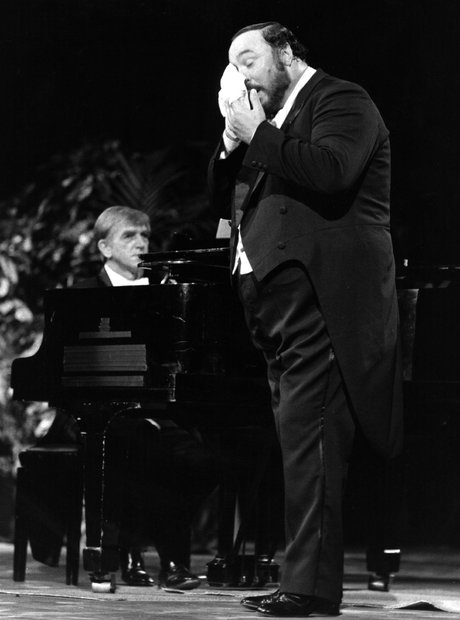
Luciano Pavarotti with his handkerchief (Facebook Image)
Throughout the 1990s, Luciano Pavarotti starred in numerous massive outdoor concerts, including a televised one in London’s Hyde Park, with a record attendance of 150,000 people, including the royal family. It was pouring rain that day in London, but no one moved, not even Lady Di, who would later become a great friend. Together they would organize a benefit concert for the Red Cross.
From that moment on, Pavarotti began to feel more and more committed to helping others. Between 1992 and 2003, he organized annually in his hometown, Modena, the famous event “Luciano Pavarotti & Friends”. World-class pop and rock stars such as Bryan Adams, Bon Jovi, Queen, U2, Dolores O’Riordan, Deep Purple, Laura Pausini, Stevie Wonder, Eros Ramazzotti, Spice Girls, Zucchero, Andrea Bocelli, Céline Dion and Tracy Chapman, among many others, performed on these stages. The concerts achieved enormous popularity, fusing opera with contemporary music.
In 1991, Pavarotti temporarily stepped away from his classic lyric roles to perform Otello in four performances in the United States. This is considered one of the most challenging tenor roles in the entire operatic repertoire, becoming one of his most talked about and debated projects.
That same year, he brought his passion for horses to the stage by organizing the “Pavarotti Horse Show”, his first equestrian show. Pavarotti loved horses deeply; he had a stable at his home and spent as much time as possible with them. His affection was such that, if one of them got sick, he would spend the whole night at their side in the stable.
The last fifteen years of Luciano Pavarotti’s career were marked by health problems, especially in his legs. Despite this, although he performed less frequently, he never left the big stages where he was always acclaimed.
In 1992, while singing at the MET in New York, his voice unexpectedly broke. The same situation was repeated in 1993 during a performance of Don Carlo in Milan, which earned him strong criticism and even booing from the audience. Many felt that his foray into pop and rock music had negatively affected his voice. Pavarotti, however, did not let the criticism stop him and continued to collaborate with numerous artists of various genres. These included Eros Ramazzotti, Sting, Andrea Bocelli, Céline Dion, Liza Minnelli, Elton John, Tracy Chapman, Michael Jackson, Barry White, Caetano Veloso, Mercedes Sosa, U2 and even Frank Sinatra.
One of his most emblematic concerts was the 1994 Pavarotti and Friends, where he managed to convince U2 to compose a special song, “Miss Sarajevo”, and perform with him. The event was organized in favor of children affected by the Bosnian war. Pavarotti, who had lived through the war as a child and witnessed horrors such as people being hanged in the streets, felt a deep connection with the Bosnian children. Not only did he visit them to offer support and hope, but he also helped open a music conservatory to help them find an escape through art.
Luciano Pavarotti Caruso
In 1993, more than 500,000 people gathered to attend Luciano Pavarotti’s free performance in New York’s Central Park, making it the largest concert in the park’s history. This was in addition to the millions of viewers who followed the television broadcast around the world. A month later, he repeated the feat by singing in front of 300,000 people at the foot of the Eiffel Tower in Paris.
At the time, Pavarotti broke the record cache for a musician, charging $1 million per performance, plus almost another million extra from merchandising. However, despite the fame and money, he confessed to feeling lonely in his Central Park apartment. Whenever he could, he would invite friends over for dinner and singing. Among them was “Team Briscola,” a group of lifelong friends who often accompanied him on tour. Music, food and friends were always what brought him the most happiness. In moments of solitude, he used to paint colorful pictures of his beloved Italy.
In 1995, on Pavarotti’s 60th birthday, he met Nicoletta Mantovani, a 23-year-old who was studying natural sciences and working in horse shows to pay for her university studies. They met during a horse show he was watching, and they connected immediately, despite the 34 years that separated them. Pavarotti was honest with her from the beginning, explaining that his marriage was broken, and they began a loving relationship. In the public eye, they introduced Nicoletta as his secretary. Shortly after the relationship began, Nicoletta was diagnosed with multiple sclerosis, and Pavarotti threw himself completely into caring for her until she recovered.
That same year, 1995, he performed ‘Ave Maria’ with Dolores O’Riordan. Princess Diana of Wales, who attended the performance, commented to O’Riordan that the piece brought tears to her eyes. Also in 1995, a television documentary entitled ‘The Best Is Yet to Come’ was broadcast, in which Pavarotti reviewed his life and career with great candor. Many years later, in 2019, American filmmaker Ron Howard directed a feature-length documentary recounting the tenor’s entire life.
In 1996, Luciano Pavarotti and his wife Adua separated after 34 years of marriage. His double life with Nicoletta Mantovani came to light, making the front pages of television and newspapers. Adua, who had never wanted to believe the rumors about his affairs -which he himself always denied-, this time could not ignore the photos that confirmed everything. Pavarotti did not want to divorce Adua, as it pained him to part with such an important part of his life, but it finally happened. He moved to live in the gardener’s house, a small two-room apartment. Unfortunately, this event also distanced him from his daughters.
In Italy, the image of a family man that he had always projected crumbled, dividing society between those who supported and those who criticized Nicoletta. He himself acknowledged, “I am simply human and I had fallen in love with Nicoletta.”
In 2002, his parents passed away, both from pancreatic cancer, the same disease that would later also affect Pavarotti.
Nicoletta and Luciano married in 2003, remaining together until his death in 2007.
Among the countless awards and distinctions he received throughout his career, two stand out especially for having granted him Guinness World Records:
- The first, achieved in 1988 at the Berlin Opera House, was the record for the highest number of “curtain calls” (curtain calls). Performing Donizetti’s “The Elixir of Love”, Pavarotti received a 67-minute ovation, coming on stage 165 times. Years later, in 1991, Plácido Domingo would surpass that record with 80 minutes of applause.
- The second Guinness was awarded to him for being part of the best-selling classical album in history, thanks to “Carreras Domingo Pavarotti in Concert”, the iconic recording of The Three Tenors.
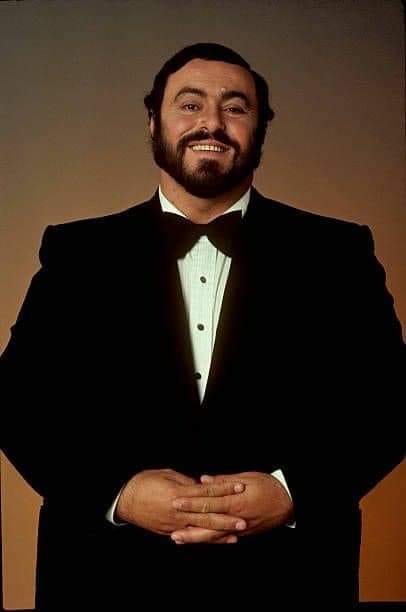
Luciano Pavarotti (Press Image)
In 2001 a compilation of all his greatest romantic hits was released entitled “Amore: The Essential Romantic Collection”.
In 2003, surprisingly, his wife Nicoletta became pregnant with twins. During her pregnancy, a tumor was detected and doctors advised her to have an abortion. She decided to go ahead and had the twins, Alice and Ricardo, although the latter, Pavarotti’s only male child, died shortly after birth. This time she was present at the birth, even though her superstition made her believe that it would bring bad luck, something that, sadly, was confirmed.
A few months earlier, he had also become a grandfather, which helped him reconcile with his daughters and his ex-wife. He knew he had made serious mistakes, but, as Adua, his first wife, used to say, he was an excellent person at heart. Time healed his family relationship.
At the end of 2003 he released his final compilation and his first and only crossover album, “Ti Adoro”. The album was a wedding present for Nicoletta. That same year he was named Commander of the Order of Cultural Merit of Monaco.
After more than four decades on stage, he began his final farewell tour in 2004, at the age of 69, with more than 40 dates. In her last performance at the Metropolitan Opera in New York, she received a standing ovation when she sang Tosca. Throughout her career, she reached a staggering 378 performances at the Metropolitan Opera.
In 2004, his former American manager, Herbert Breslin, published a book called “The King & I”, in which he accused him of not being able to read music properly. The accusation was false, although he himself admitted that he was not able to read orchestral scores.
In March 2005, he underwent neck surgery to repair two vertebrae and, in early 2006, he returned to the operating room for a back problem.
His last large-scale performance was in December 2005, in Taiwan, as part of his farewell tour of Asia.
On February 10, 2006, she sang “Nessun Dorma” for the last time at the opening ceremony of the Winter Olympics in Turin, Italy. She received a standing ovation, although the performance had been recorded weeks earlier. Due to her delicate health, she would not have been able to sing live in such a cold and open space.
Later, in 2006, while he was preparing at his New York home to resume his farewell world tour, a malignant tumor was discovered in his pancreas. All concerts were cancelled. He underwent surgery, but suffered pneumonia in the postoperative period. Although he partially recovered, in August 2007 he was hospitalized again for high fever and respiratory complications. He was released from the clinic a few days later, but on September 6, 2007, he died at home from pancreatic cancer. He was unable to fulfill some of his last wishes, such as retiring to teach young performers or to see his daughter Alice grow up. Still, until the end he did everything he could for his family, leaving his inheritance divided: half to his widow Nicoletta and the other half to be divided among his four daughters.
The funeral ceremony in his hometown was attended by great personalities of politics and music, among them Andrea Bocelli, who performed Mozart’s Ave verum corpus.
Luciano Pavarotti always believed in people. That’s why he had a smile on his face and the public returned it with love. His greatest wish was to transmit opera to the whole world, and he certainly achieved this through his hundreds of performances and his 100 million records sold, being one of the most successful singers of any musical genre and one of the most important Italians in history.
Thanks to his charitable foundation and his voice, Luciano Pavarotti will remain forever in people’s hearts.


Did you like Pavarotti’s biography? Tell us about it 🙂
Find more music stories related to:


0 Comments